ICT consulting vs IT consulting: understanding the distinction matters for UK SMEs choosing technology support. ICT (Information and Communication Technology) consulting encompasses broader business technology integration including unified communications, collaboration platforms, and digital transformation, whilst IT consulting traditionally focuses on technical infrastructure, support, and system maintenance.
Key takeaways
• ICT consulting addresses communication technology integration alongside traditional IT infrastructure needs
• IT consulting typically centres on technical support, system maintenance, and infrastructure management
• SMEs often benefit more from ICT approaches that connect business processes with technology solutions
• Cost structures differ, with ICT consulting offering broader strategic value but potentially higher upfront investment
• The right choice depends on your business size, growth plans, and current technology maturity
What ICT consulting encompasses beyond traditional IT
Information and communication technology consulting takes a holistic approach to business technology strategy. Rather than focusing solely on keeping systems running, ICT consulting examines how technology enables communication, collaboration, and business processes across your organisation.
An ICT consultant evaluates your entire digital ecosystem: how your team communicates internally and with customers, whether your systems share data effectively, and how technology supports your business goals. This includes unified communications platforms, cloud-based collaboration tools, customer relationship management integration, and digital workflow automation.
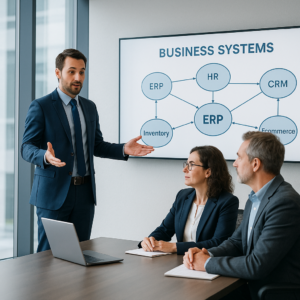
For UK SMEs, this broader perspective proves valuable because most technology challenges stem from fragmented systems that don’t communicate properly. Your accounting software might not connect to your CRM, your team might use three different messaging platforms, or customer data might exist in multiple disconnected databases.
ICT consulting addresses these integration challenges by designing technology solutions that work together cohesively. This approach recognises that modern business technology is fundamentally about enabling communication and information flow, not just maintaining hardware and software.
Communication technology integration in modern businesses
Modern SMEs rely heavily on communication technology that extends far beyond traditional IT infrastructure. Video conferencing, instant messaging, collaborative document editing, customer support platforms, and mobile workforce tools have become essential business operations.
ICT consulting specifically addresses how these communication technologies integrate with your existing business systems. For example, ensuring your customer support platform connects to your CRM system, so support conversations automatically update customer records. Or configuring your accounting software to integrate with your e-commerce platform so orders flow through automatically.
This integration focus distinguishes ICT consulting from traditional IT approaches. Where IT consulting might implement separate solutions for different needs, ICT consulting designs interconnected systems that share information and reduce manual data entry.
The communication aspect also encompasses external-facing technology: how customers interact with your business online, how you manage digital marketing campaigns, and how you handle online sales or service delivery. These elements require technical expertise combined with understanding of business communication requirements.
Understanding ICT consulting vs IT consulting: when SMEs need each service
The choice between ICT and IT consulting depends largely on your current business situation and growth objectives. IT consulting suits businesses that need reliable technical support and system maintenance but have relatively straightforward technology requirements.
Choose IT consulting when you need help with server maintenance, software troubleshooting, network security, or regular system updates. This approach works well for established SMEs with stable technology needs who primarily require dependable technical support and incident response.
ICT consulting becomes more valuable when you’re experiencing growth, digital transformation, or communication challenges. If your team struggles with fragmented systems, poor information flow between departments, or inefficient manual processes, ICT consulting can provide strategic solutions.
Growing SMEs often benefit from ICT consulting because expansion typically requires better communication tools, integrated systems, and automated processes. Rather than adding more disconnected software solutions, ICT consulting helps design cohesive technology architecture that scales with your business.
Consider ICT consulting if you’re planning cloud migration, implementing new business intelligence capabilities, or need to improve customer communication channels. These scenarios require strategic thinking about how technology supports business objectives, not just technical implementation.
Cost implications of ICT vs IT consulting approaches
Cost structures differ significantly between ICT and IT consulting models. Traditional IT consulting often follows a break-fix approach or hourly support model, charging for specific technical services or incident resolution.
ICT consulting typically involves higher upfront strategic planning costs but can deliver better long-term value through improved efficiency and integration. Initial ICT projects might cost £3,000-£15,000 for comprehensive technology strategy and implementation, compared to £500-£2,000 for specific IT consulting projects.
However, ICT consulting often reduces ongoing operational costs by eliminating duplicate systems, automating manual processes, and improving communication efficiency. Many SMEs find that better technology integration saves several hours weekly of administrative work, which translates to significant cost savings over time.
The IT Consultancy London | ICT Consulting Firm For SMEs approach at ICT London combines both models, offering strategic ICT planning alongside ongoing IT support services. This hybrid approach helps SMEs access strategic technology guidance without sacrificing reliable technical support.
Consider total cost of ownership when comparing options. While ICT consulting may require larger initial investment, the resulting system efficiency and reduced manual work often provide better return on investment for growing businesses.
Choosing the right consultant type for your business size
Business size significantly influences whether ICT or IT consulting delivers better value. Very small businesses (under 10 employees) often start with basic IT consulting for essential services: reliable internet, basic cybersecurity, and simple cloud storage solutions.
Growing businesses (10-50 employees) typically benefit most from ICT consulting approaches. At this size, communication challenges become apparent, manual processes create bottlenecks, and system integration becomes crucial for efficiency. ICT consulting helps establish scalable technology foundations before problems become critical.
Larger SMEs (50+ employees) usually require comprehensive ICT strategies that encompass multiple communication technologies, advanced business intelligence, and sophisticated integration requirements. At this scale, fragmented systems create significant productivity losses that ICT consulting can address strategically.
Consider your growth trajectory when choosing consultant types. If you plan significant expansion, investing in ICT consulting early can prevent future integration challenges and system overhauls.
The key factor isn’t just current size but technology maturity. A small business with complex customer communication needs might benefit from ICT consulting, whilst a larger business with simple technology requirements might only need traditional IT support.
Real-world examples of ICT consulting outcomes
SME manufacturers often use ICT consulting to connect production systems with customer communication platforms. Instead of manually updating customers about order progress, integrated systems automatically send status updates and delivery notifications, reducing administrative work whilst improving customer experience.
Professional service firms benefit from ICT consulting that connects project management tools with billing systems and client communication platforms. This integration enables automatic time tracking, invoice generation, and client updates, eliminating duplicate data entry and reducing billing errors.
Retail businesses frequently use ICT approaches to integrate online and offline sales channels with inventory management and customer communication systems. When customers make purchases, systems automatically update stock levels, trigger reorder alerts, and send personalised follow-up communications.
Many UK SMEs discover that ICT consulting reveals previously invisible inefficiencies. One common outcome involves replacing multiple monthly software subscriptions with integrated solutions that cost less whilst providing better functionality and data sharing.
The strategic value of ICT consulting often becomes apparent months after implementation, when businesses realise they’re spending less time on administrative tasks and more time on revenue-generating activities.
Common questions about ICT and IT consulting
Is ICT consulting more expensive than traditional IT support?
Initial ICT projects typically cost more due to strategic planning and integration work, but many SMEs achieve cost savings through improved efficiency and reduced software subscriptions.
Can one provider handle both ICT strategy and ongoing IT support?
Yes, many providers offer comprehensive services that combine strategic ICT planning with reliable technical support, giving SMEs access to both strategic guidance and day-to-day assistance.
How long does ICT consulting implementation take?
Most SME ICT projects complete within 4-12 weeks, depending on complexity and integration requirements. Simple communication tool implementations might take 2-4 weeks, whilst comprehensive system integration projects can require 3-6 months.
Do we need in-house IT staff if we use ICT consulting?
Many SMEs successfully operate with external ICT consulting and managed IT services, eliminating the need for dedicated internal IT staff whilst maintaining reliable technology support.
Next steps for choosing the right technology partner
Start by assessing your current technology pain points and business objectives. If you primarily need reliable technical support for existing systems, traditional IT consulting might suffice. If you’re experiencing communication challenges, growth obstacles, or manual process inefficiencies, ICT consulting offers better strategic value.
Consider scheduling a technology assessment with an ICT consulting company that understands UK SME requirements. This evaluation should examine your current systems, identify integration opportunities, and provide clear recommendations for improving business technology effectiveness.
Focus on providers that offer both strategic ICT planning and ongoing technical support, ensuring you receive comprehensive technology partnership rather than fragmented services. The right provider should explain recommendations in plain English and demonstrate clear understanding of SME operational constraints and budget considerations.
Book a consultation to discuss whether ICT or IT consulting approaches best suit your business needs and growth objectives.